Dental Implants vs. Dentures: Which Option Is Right for You?
Losing one or more teeth can affect much more than your smile. Missing teeth can make it difficult to chew comfortably, speak clearly, and maintain proper alignment of your remaining teeth. Fortunately, modern dentistry offers several reliable tooth replacement solutions, with dental implants and dentures being two of the most common options.
While both treatments restore your smile, they differ in how they function, feel, and are maintained. Understanding the benefits and limitations of each can help you make an informed decision about your long-term oral health.
Why Replacing Missing Teeth Matters
Some people believe that replacing a missing tooth is purely cosmetic. However, leaving gaps in your smile can lead to several oral health problems over time, including:
- Difficulty chewing certain foods
- Changes in speech
- Shifting of neighboring teeth
- Bone loss in the jaw
- Changes in facial appearance
- Increased risk of additional tooth loss
Replacing missing teeth helps restore function, improve confidence, and protect your long-term oral health.
What Are Dental Implants?
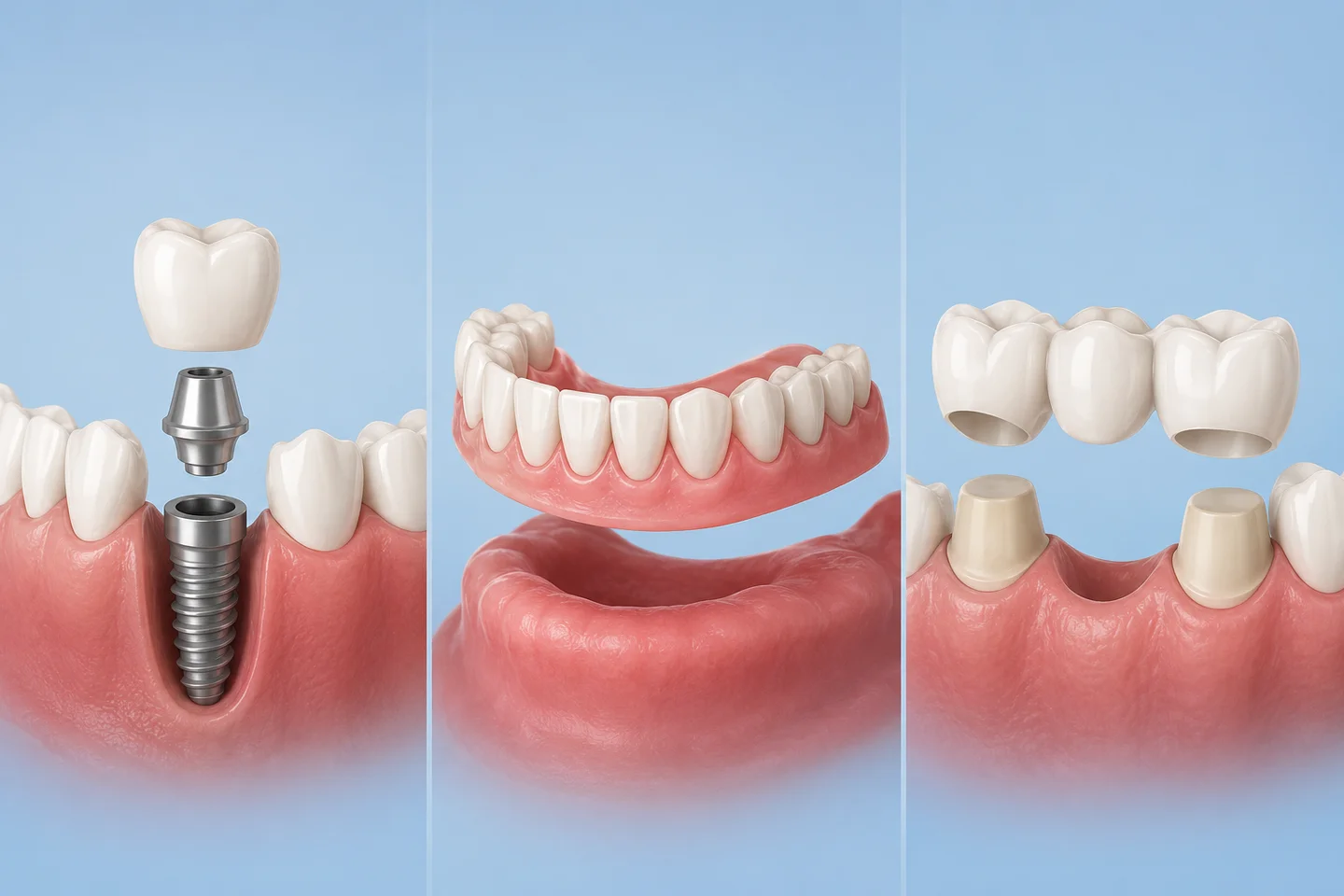
Dental implants are artificial tooth roots made from biocompatible titanium that are surgically placed into the jawbone. Once the implant fuses with the bone through a process called osseointegration, a custom-made crown, bridge, or denture is attached to restore your smile.
Because implants become integrated with the jawbone, they closely mimic the look, feel, and function of natural teeth.
Dental implants can replace:
- A single missing tooth
- Multiple missing teeth
- An entire arch of teeth using implant-supported restorations
What Are Dentures?
Dentures are removable prosthetic appliances designed to replace missing teeth and surrounding tissues. They are custom-made to fit comfortably over your gums and restore your ability to eat and speak.
There are several types of dentures, including:
- Full dentures for patients missing all teeth in an arch
- Partial dentures for patients with some natural teeth remaining
- Implant-supported dentures that combine the stability of implants with the coverage of dentures
Traditional dentures rest directly on the gums and can be removed for cleaning.
Dental Implants vs. Dentures: Key Differences
Although both options replace missing teeth, they differ in several important ways.
Stability
Dental implants are securely anchored into the jawbone, providing exceptional stability during eating and speaking. They do not shift or slip because they function like natural tooth roots.
Traditional dentures rely on the gums for support and may move slightly during eating or talking, especially if they become loose over time.
Comfort
Because implants become part of your jaw, they often feel very similar to natural teeth once healing is complete.
Dentures may require an adjustment period as patients adapt to wearing them. Some individuals experience sore spots or minor irritation until the dentures fit comfortably.
Appearance
Both dental implants and modern dentures are designed to look natural.
However, implants help preserve the jawbone, which supports the natural contours of the face. Traditional dentures cannot prevent bone loss, so facial appearance may gradually change over time as the jawbone shrinks.
Chewing Ability
Dental implants provide excellent biting strength, allowing many patients to enjoy a wide variety of foods with confidence.
Traditional dentures restore chewing ability but may make it more difficult to eat hard, crunchy, or sticky foods.
Longevity
With proper oral hygiene and routine dental care, dental implants can last for many years and often decades.
Dentures typically require periodic adjustments, relining, or replacement due to natural changes in the gums and jawbone.
Benefits of Dental Implants
Dental implants have become one of the most popular tooth replacement options because they offer several long-term advantages.
Benefits include:
- Natural appearance and function
- Excellent stability
- Preservation of jawbone density
- No need to alter adjacent healthy teeth
- Easy maintenance with regular brushing and flossing
- Long-lasting results with proper care
For many patients, implants provide the closest replacement to natural teeth.
Benefits of Dentures
Dentures remain an excellent treatment option for many individuals, particularly those missing multiple teeth or seeking a more affordable solution.
Benefits include:
- Replacement of multiple missing teeth
- Non-invasive treatment compared to implant surgery
- Lower initial cost
- Improved appearance and facial support
- Custom-made for each patient's smile
Modern dentures are more comfortable and natural-looking than ever before.
Who Is a Good Candidate for Dental Implants?
You may be a suitable candidate for dental implants if you:
- Have one or more missing teeth
- Have healthy gums
- Have sufficient jawbone to support an implant
- Practice good oral hygiene
- Are in good overall health
Even if you have experienced some bone loss, procedures such as bone grafting may help prepare the jaw for implant placement.
Who May Benefit More from Dentures?
Dentures may be recommended if you:
- Are missing many or all teeth
- Have significant bone loss that limits implant placement
- Prefer a removable restoration
- Are looking for a more budget-friendly tooth replacement option
- Have medical conditions that make surgery less suitable
Your dentist will evaluate your oral health and discuss which treatment best meets your needs.
Can Dental Implants and Dentures Be Combined?
Yes. Many patients choose implant-supported dentures, which combine the affordability of dentures with the stability of dental implants.
Implant-supported dentures offer several advantages:
- Greater stability during eating and speaking
- Reduced movement
- Improved chewing efficiency
- Better comfort
- Increased confidence
For many patients, this treatment provides an excellent balance between function and affordability.
Factors Your Dentist Will Consider
Choosing between implants and dentures involves more than replacing missing teeth.
Your dentist will evaluate:
- The number of missing teeth
- Bone density and jaw health
- Gum health
- Overall medical history
- Lifestyle and oral hygiene habits
- Budget and treatment goals
A comprehensive examination allows your dentist to recommend the most appropriate long-term solution.
Caring for Your Tooth Replacement
Whether you choose implants or dentures, proper maintenance is essential.
To protect your new smile:
- Brush twice daily
- Floss around implants or remaining natural teeth
- Clean dentures every day using recommended products
- Remove traditional dentures overnight unless instructed otherwise
- Attend regular dental examinations and professional cleanings
- Report any discomfort or changes in fit promptly
Routine dental care helps extend the life of your restoration and protects your overall oral health.
Restore Your Smile with the Right Tooth Replacement Option
Choosing between dental implants and dentures is a personal decision that depends on your oral health, lifestyle, and long-term goals. Both treatments can restore your smile, improve chewing ability, and boost your confidence. The best choice is the one that provides lasting comfort, function, and support for your individual needs.
At Crest Hill Dental Studio, we offer comprehensive tooth replacement solutions, including dental implants, implant-supported dentures, and custom dentures. Our team will carefully evaluate your oral health and help you choose the treatment that best restores your smile and quality of life. We proudly serve patients throughout Crest Hill, Joliet, Lockport, Romeoville, and surrounding Illinois communities.
FAQs
Q: Are dental implants better than dentures?
A: Dental implants provide greater stability, help preserve jawbone health, and closely mimic natural teeth. Dentures remain an excellent option for many patients, particularly those replacing multiple teeth or seeking a removable solution. Your dentist can help determine which treatment is right for you.
Q: How long do dental implants last?
A: With proper oral hygiene and regular dental visits, dental implants can last for many years and often decades. The attached crown may eventually need replacement due to normal wear.
Q: Can I eat normally with dentures?
A: Yes. Most patients can enjoy a wide variety of foods with dentures, although very hard or sticky foods may require extra care. As you adjust to wearing dentures, chewing becomes easier over time.
Q: Am I too old for dental implants?
A: Age alone is not a barrier to dental implant treatment. Good overall health, healthy gums, and adequate jawbone support are generally more important factors than age when determining candidacy.

We're Excited to Welcome You to
Crest Hill Dental Studio
We will open in August 2026 to provide modern, compassionate dental care in a comfortable and welcoming environment.

Phone: (815) 927-7757

Office Hours
Monday: 10:00 AM - 5:00 PM
Tuesday: 11:00 AM - 7:00 PM
Wednesday: 10:00 AM - 5:00 PM
Thursday: 11:00 AM- 7:00 PM
Friday: 9:00 AM to 2:00 PM
Saturday only by Appointment, 10:00 AM to 1:00 PM
Sunday: Closed

© 2026 Crest Hill Dental Studio | All Rights Reserved | Privacy Policy | Digital Marketing by Remedo