Digital X-Rays & 3D CBCT Imaging
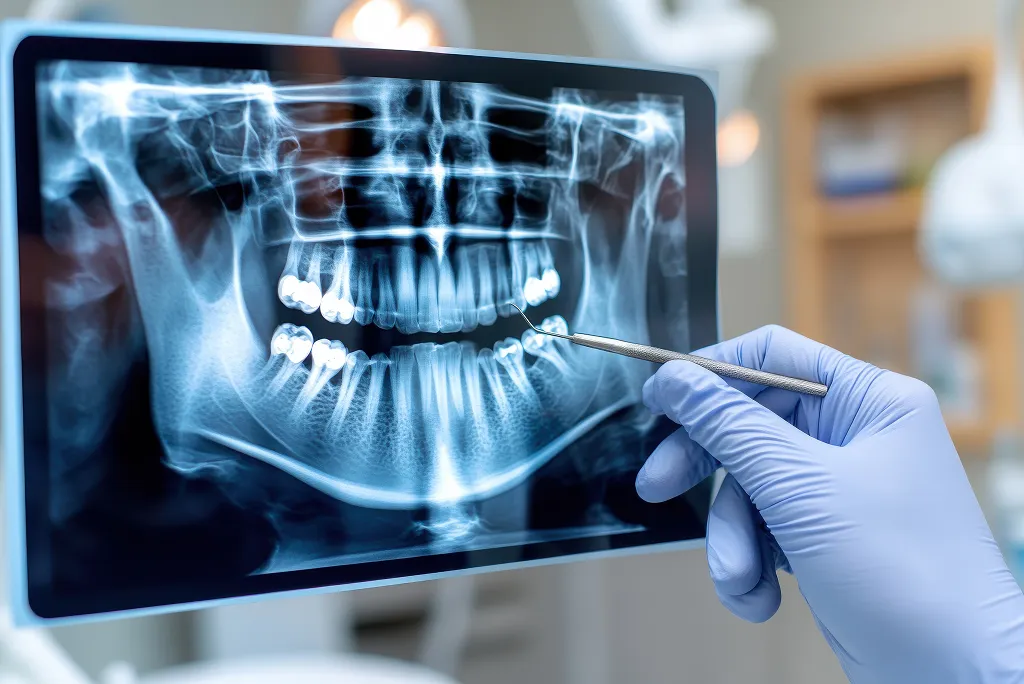
At Crest Hill Dental Studio, every treatment decision starts with a clear, complete picture of what is actually happening inside your mouth and jaw. That is why Digital X-Rays & 3D CBCT Imaging in Crest Hill form the foundation of how Dr. Rolla N Kattoum, DMD, and our team plan care. Instead of guessing or relying on what can be seen with the naked eye alone, we use advanced imaging technology to look beneath the surface, at the roots, the bone, the nerves, and the structures that determine whether a treatment will succeed long-term.
If you have ever wondered why your dentist wants an X-ray before filling a cavity, or why a 3D scan is recommended before a dental implant, this page walks you through exactly what these technologies do, why they matter, and what your experience will look like when you visit us in Crest Hill.
What Digital X-Rays Actually Show Us
A digital X-ray is a low-dose image that captures the internal structure of your teeth and supporting bone in seconds. Unlike traditional film X-rays, digital sensors produce an image almost instantly, which means less waiting for you and a sharper, more detailed view for us to study.
During a consultation, we often explain it this way to patients: your enamel and gum tissue only tell part of the story. Decay can be forming between teeth where a toothbrush and even a dental mirror cannot reach. An infection can be quietly developing at the tip of a tooth root with no visible sign on the surface. Bone loss from gum disease can progress for months before it becomes obvious. Digital X-rays let us catch these issues early, often before they cause pain, so treatment stays simple rather than becoming urgent.
We use digital X-rays to evaluate:
- Cavities between teeth and beneath old fillings
- The health of tooth roots and surrounding bone
- Impacted or developing wisdom teeth
- Bone density before dental implant placement
- The fit and condition of existing crowns, bridges, or fillings
- Signs of infection, cysts, or abnormal growths
What Makes 3D CBCT Imaging Different
Cone Beam Computed Tomography, or CBCT, takes imaging a significant step further. Where a standard X-ray gives us a flat, two-dimensional image, CBCT builds a complete three-dimensional model of your jaw, teeth, sinuses, nerve pathways, and airway in a single scan.
Think of it as the difference between looking at a photograph of a house and being able to walk through a full architectural model of it. With a 3D CBCT scan, Dr. Rolla N Kattoum, DMD, can rotate the image, measure exact bone density and width, and see the precise location of nerves and sinus cavities before any surgical procedure begins. This level of detail is what allows us to plan treatments with a degree of precision that simply is not possible from a photograph or a traditional X-ray alone.
CBCT imaging plays a central role in:
- Planning dental implant placement with exact positioning and angle
- Evaluating impacted teeth and their relationship to nerves before extraction
- Diagnosing the source of jaw pain, TMJ issues, or unexplained facial discomfort
- Assessing airway structure for patients being evaluated for sleep-related breathing concerns
- Root canal treatment planning when a tooth has unusual or complex root anatomy
- Detecting bone abnormalities, cysts, or lesions that a flat image could miss
Why This Technology Changes the Way Treatment Is Planned
When patients ask why imaging matters so much, the honest answer is that it removes uncertainty. A treatment plan built on a clear, three-dimensional view of your anatomy is fundamentally more predictable than one built on assumption. For a procedure like a dental implant, knowing the exact bone density and the exact distance to a nerve before surgery is the difference between a smooth, well-planned appointment and unexpected complications discovered midway through treatment.
This is also why our imaging technology supports faster, more accurate care across nearly every service we offer, from same-day dentistry to sedation planning to restorative work. When we can see clearly, we can move confidently, and that confidence translates directly into a more comfortable experience for you.
Is Digital X-Ray or CBCT Imaging Right for You
Most patients will have digital X-rays taken as part of a routine dental exam, since they are quick, low-dose, and provide essential diagnostic information for everyday care. CBCT imaging is typically recommended in more specific situations, including:
- You are considering a dental implant and need precise bone measurements
- You have a tooth that needs extraction, and it is positioned near a nerve or sinus
- You are experiencing jaw pain, clicking, or discomfort that has not been explained
- You are being evaluated for sleep apnea or airway-related concerns
- A previous root canal has failed, or the tooth anatomy appears unusually complex on a standard X-ray
If any of these situations sound familiar, Dr. Rolla N Kattoum, DMD, will discuss during your consultation whether a 3D scan is the right next step for your specific case.
What to Expect During Your Imaging Appointment
Both digital X-rays and CBCT scans are non-invasive and take only a few minutes.
For a digital X-ray, you will bite down gently on a small sensor or stand in front of a panoramic unit while a brief image is captured. There is no discomfort involved, and the image appears on screen almost immediately for review.
For a CBCT scan, you will stand or sit inside a scanning unit that rotates around your head for about 20 to 40 seconds while it captures a complete series of images. You will not feel anything during the scan itself. Once complete, the imaging software builds a detailed 3D model that Dr. Kattoum can review with you directly, often during the same visit, so you can see exactly what we see and understand the reasoning behind your treatment recommendations.
There is no recovery time associated with either type of imaging. You are free to resume your day immediately afterward.
Safety and Radiation Exposure
We understand that radiation exposure is a common concern, and it is a fair one to raise. Digital X-rays use up to 90 percent less radiation than older film-based systems, and CBCT scans, while capturing far more detailed information, are calibrated to use the lowest dose necessary to produce a diagnostically useful image. We use imaging only when it meaningfully contributes to your diagnosis or treatment plan, never as a routine formality.
The Outcome You Can Expect
Choosing a practice that invests in advanced imaging means your treatment plan is built on precise information rather than educated guesswork. It means fewer surprises during procedures, more accurate outcomes for implants and restorative work, and earlier detection of problems that might otherwise go unnoticed until they become painful or costly to treat. For patients throughout Crest Hill, Joliet, Lockport, Plainfield, and Shorewood, this technology is part of what allows Crest Hill Dental Studio to deliver same-day, precision-guided dental care with confidence.
Schedule Your Free Consultation at Crest Hill Dental Studio
If you have been told you need imaging before a procedure, or if it has simply been a while since your last dental exam, our team at Crest Hill Dental Studio is here to help. Contact us today to schedule your appointment and experience precision-guided dental care built around a clear, complete picture of your oral health.
Frequently Asked Questions
Q: Is a 3D CBCT scan safe, and how does it compare to a regular dental X-ray in terms of radiation?
A: Yes, CBCT scans are considered safe for dental diagnostic use. While a CBCT scan does involve a higher dose than a single digital X-ray because it captures a full three-dimensional volume, modern CBCT units are designed to use the lowest radiation dose necessary for a clear diagnostic image, and the scan is only recommended when it will meaningfully change or improve your treatment plan.
Q: Do I need a 3D CBCT scan for every dental implant, or only in certain cases?
A: CBCT imaging is strongly recommended for nearly all implant cases because it allows us to measure your exact bone density, width, and height, and to see the precise location of nerves and sinus structures before surgery. This level of planning significantly reduces the risk of complications and helps ensure the implant is placed in the ideal position for long-term success.
Q: How long does a CBCT scan take, and is it uncomfortable?
A: The scan itself takes roughly 20 to 40 seconds, and the entire appointment, including positioning, typically takes only a few minutes. There is no discomfort involved. You simply remain still while the unit rotates around your head to capture the images.
Q: Can digital X-rays and CBCT imaging detect problems I can't feel or see?
A: Yes, this is one of the main reasons we rely on imaging so heavily. Cavities between teeth, early bone loss from gum disease, infections at the root tip, and impacted teeth often show no visible symptoms in their early stages. Imaging allows us to catch these issues while treatment is still simple and conservative.
Q: Will I get to see and understand my own images before treatment begins?
A: Absolutely. Dr. Kattoum reviews your images directly with you, explaining what we are looking at and how it relates to your specific treatment plan. Our goal is for you to fully understand your own dental health and the reasoning behind any recommended treatment before you make a decision.

We're Excited to Welcome You to
Crest Hill Dental Studio
We will open in August 2026 to provide modern, compassionate dental care in a comfortable and welcoming environment.

Phone: (815) 927-7757

Office Hours
Monday: 10:00 AM - 5:00 PM
Tuesday: 11:00 AM - 7:00 PM
Wednesday: 10:00 AM - 5:00 PM
Thursday: 11:00 AM- 7:00 PM
Friday: 9:00 AM to 2:00 PM
Saturday only by Appointment, 10:00 AM to 1:00 PM
Sunday: Closed

© 2026 Crest Hill Dental Studio | All Rights Reserved | Privacy Policy | Digital Marketing by Remedo