Do You Need a Bone Graft or Sinus Lift Before Implants?
You went in expecting to get dental implants, and your dentist told you that you need a bone graft or a sinus lift first. Now you are wondering what that means, why you need it, and how much longer it adds to the process.
It is a more common situation than most people realize. Bone loss in the jaw happens for a lot of reasons missing teeth, gum disease, years of wearing dentures, or simply the natural aging process. And without enough bone to anchor an implant securely, the implant will not hold up over time.
The good news is that bone grafting and sinus lifts are well-established procedures that can rebuild the foundation your jaw needs. This post explains what each one involves, why your dentist might recommend one, and what recovery actually looks like.
Why Jawbone Matters for Dental Implants
A dental implant is essentially a small titanium post that gets placed into your jawbone. Over the following months, the bone grows around and fuses with the post a process called osseointegration. That bond is what gives the implant its strength and stability.
For that to work, there needs to be enough healthy bone surrounding the implant on all sides. If the bone is too thin, too shallow, or too soft, the implant does not have enough to hold onto. Placing an implant into insufficient bone is like trying to anchor a fence post in loose sand it may stand for a while, but it will not last.
That is where bone grafting and sinus lifts come in. They rebuild the bone so the implant has a solid foundation.
What Causes Bone Loss in the Jaw?
Your jawbone stays strong because your teeth stimulate it every time you chew. When a tooth goes missing, that stimulation stops, and the bone in that area begins to shrink. The longer a tooth has been gone, the more bone you lose.
Other common causes include advanced gum disease, which destroys the bone that supports your teeth; long-term denture wear, which puts pressure on the gum tissue but does not stimulate the underlying bone; trauma or injury to the face and jaw; infections around tooth roots; and certain medical conditions that affect bone density.
This is one of the reasons dentists often recommend replacing missing teeth sooner rather than later. The longer you wait, the more bone loss occurs, and the more likely it is that you will need grafting before implants can be placed.
What Is a Bone Graft?
A bone graft is a procedure that adds bone material to an area of your jaw where the bone has become too thin or too weak to support an implant. The graft material acts as a scaffold your body uses it as a framework to grow new, natural bone over time.
Where the graft material comes from
Several types of graft material can be used:
Your own bone, harvested from another area of your mouth or body, is considered the gold standard because it contains living cells that actively promote new bone growth. Donor bone from a tissue bank is processed and sterilized for safe use. Animal-derived bone, usually from bovine sources, provides an effective scaffold. Synthetic bone substitutes made from biocompatible materials are another option.
Your dentist will recommend the type that makes the most sense based on the size and location of the graft, your overall health, and what will give you the best outcome.
Common types of bone grafts
Socket preservation graft This is the most common and simplest type. When a tooth is extracted, graft material is placed directly into the empty socket to prevent the bone from collapsing inward. If you are planning implants down the road, this step during a tooth extraction can save you from needing a bigger graft later.
Ridge augmentation When bone loss has already caused the jawbone ridge to narrow or shrink, this graft builds it back up to a width and height that can support an implant. It is a more involved procedure than socket preservation and typically requires a longer healing period.
Block bone graft For areas with significant bone loss, a solid block of bone may be harvested from another site and secured to the deficient area with small screws. This is less common and usually reserved for more complex cases.
What happens during the procedure
Bone grafting is usually done under local anesthesia, though sedation options are available for patients who want additional comfort. Your dentist makes a small incision in the gum tissue, places the graft material where the bone is deficient, and covers it with a membrane that protects the graft while it heals. The gum tissue is then closed with sutures.
Advanced imaging like CBCT scans allows your dental team to see exactly where the bone is deficient and plan the graft with precision before the procedure begins.
Healing timeline
This is the part that requires the most patience. After a bone graft, the area typically needs several months to heal before an implant can be placed. The graft material needs time to integrate with your natural bone, and rushing this step can compromise the final result.
Your dentist will monitor the healing with periodic imaging and let you know when the bone is ready for the next step.
What Is a Sinus Lift?
A sinus lift also called a sinus augmentation is a specific type of bone graft used in the upper jaw, in the area of the premolars and molars. It is one of the most common procedures performed before placing upper back dental implants.
Why the upper back jaw is different
Your maxillary sinuses are air-filled spaces that sit just above your upper back teeth. When upper back teeth are lost, the bone between the sinus floor and the mouth thins out over time. In some cases, the sinus itself can expand downward into the space where the tooth roots used to be.
The result is that there may not be enough bone height between the top of the ridge and the sinus floor to safely place an implant. If an implant were placed without enough bone, it could protrude into the sinus cavity which is exactly what a sinus lift prevents.
How the procedure works
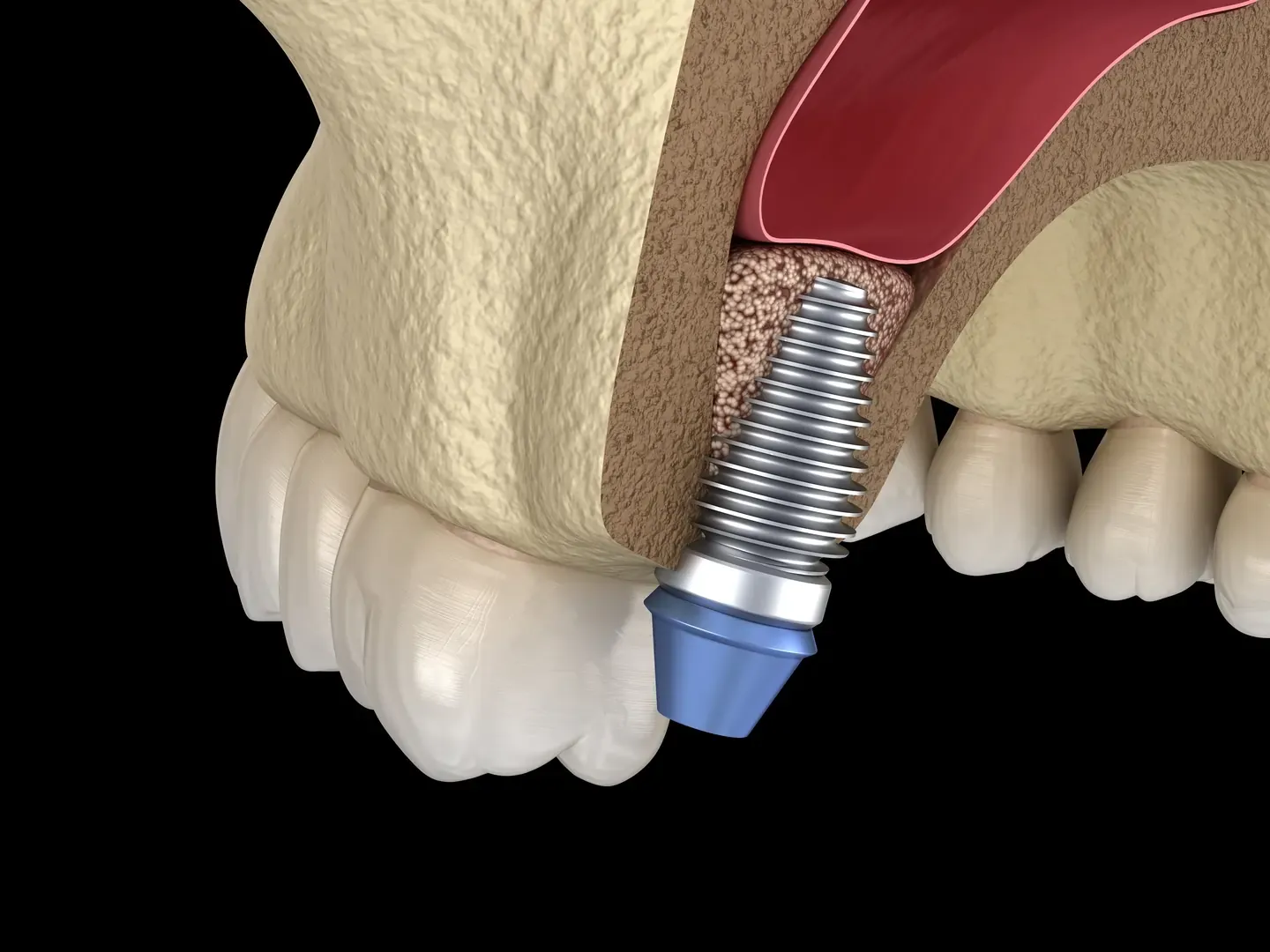
During a sinus lift, your dentist or oral surgeon makes a small opening in the bone on the side of the jaw. The membrane that lines the sinus is gently lifted upward, creating a space between the sinus floor and the ridge. Bone graft material is packed into that space, and the incision is closed.
Over the following months, the graft material matures into solid bone, increasing the height of the ridge so that an implant can be placed securely without entering the sinus.
Who needs a sinus lift?
You may need a sinus lift if you have lost upper back teeth and the bone has thinned over time, if your sinuses are naturally close to your upper jaw, or if bone loss from gum disease has reduced the available bone height in that area. Your dentist can determine whether a sinus lift is necessary based on CBCT imaging that shows the exact relationship between your bone and your sinus.
Bone Graft vs. Sinus Lift: What Is the Difference?
A sinus lift is actually a specific type of bone graft it just targets a very particular area and involves the additional step of lifting the sinus membrane. Here is how they compare in practical terms:
Location Bone grafts can be performed anywhere in the upper or lower jaw. Sinus lifts are only done in the upper back jaw, beneath the maxillary sinus.
Why it is needed Bone grafts address general bone loss from any cause. Sinus lifts address the specific problem of insufficient bone height between the jaw ridge and the sinus floor.
The procedure A standard bone graft involves placing material directly into or onto the bone. A sinus lift adds the step of carefully elevating the sinus membrane before placing the graft material beneath it.
Healing time Both require several months of healing before implants can be placed. The specific timeline depends on the size of the graft, the type of material used, and your individual healing response.
In some cases, patients need both a sinus lift to address the upper back jaw and a separate bone graft for another area.
Can You Get Implants and a Graft at the Same Time?
Sometimes, yes. If the existing bone provides enough initial stability to hold the implant in place during healing, your dentist may be able to place the graft and the implant during the same surgery. This is more common with smaller grafts and socket preservation procedures.
For larger grafts and most sinus lifts, the bone typically needs to heal and mature first before an implant can be safely placed. Your dental team will make this determination based on your imaging and the specifics of your case.
Patients pursuing All-on-4 dental implants may be able to avoid some grafting altogether, since that approach is specifically designed to work with available bone by angling the implants strategically.
What Does Recovery Look Like?
Recovery from bone grafting and sinus lifts is generally manageable, though it does require some patience and care.
The first few days Expect some swelling, mild to moderate discomfort, and possible bruising. Cold compresses help with swelling in the first 24 to 48 hours. Pain is typically well-controlled with prescribed medication. Most patients take a few days off from work.
The first two weeks Eat soft foods and avoid chewing on the graft site. Do not blow your nose forcefully if you had a sinus lift this can put pressure on the healing membrane. Avoid using straws, smoking, and strenuous exercise. Keep the area clean with gentle salt-water rinses as instructed.
Months of healing The graft matures gradually. Your dentist will monitor progress with periodic check-ups and imaging. When the bone has integrated sufficiently, you will be cleared for implant placement.
The wait can feel long, but it is what ensures the implant has a solid, lasting foundation.
How Do You Know If You Need a Graft?
You may not know until your dentist evaluates you for implants. Bone loss is not always visible or painful in many cases, the only way to tell is with dental imaging.
At your initial examination, your dental team will take detailed images of your jaw to assess the bone volume and quality in the areas where implants are being considered. If the imaging shows insufficient bone, your dentist will explain what type of grafting you need, why, and what the timeline looks like.
If you have been missing teeth for a while, have a history of gum disease, or have been wearing dentures for years, there is a higher likelihood that some grafting will be part of your implant plan. That is completely normal and not a reason to give up on implants.
Questions to Ask Your Dentist
If your dentist recommends a bone graft or sinus lift, here are some things worth asking:
What type of graft material do you recommend, and why? How long will I need to heal before the implant can be placed? Will the graft and implant be done at the same time, or in stages? What sedation options are available? What does recovery look like for my specific situation? Are there alternatives to grafting for my case?
A good dental team will walk you through the answers without rushing you.
Take the First Step Toward Implants
Hearing that you need a bone graft or sinus lift before implants can feel like a setback. But these procedures are what make it possible for patients who have lost bone to still get implants that function and last.
At Crest Hill Dental Studio, Dr. Rolla N Kattoum, DMD, and Dr. Amit Kalra, D.D.S., use CBCT imaging and digital treatment planning to map out every step of the process before anything begins. With an in-house dental lab and sedation options available, the team is set up to handle everything from the graft through the final restoration.
We serve patients in Crest Hill, Lockport, Joliet, Plainfield, Shorewood, Lemont, and surrounding Will County communities.
Call (815) 927-7757 or get in touch to schedule your free implant consultation.
Frequently Asked Questions
Q: Is a bone graft painful?
A: The procedure itself is done under local anesthesia, so you should not feel pain during the graft. Sedation is also available if you want additional comfort. After the anesthesia wears off, some soreness and swelling are normal for a few days. Most patients manage recovery well with prescribed pain medication and find that the discomfort is less than they expected.
Q: How long does a bone graft take to heal before implants?
A: Healing time varies depending on the type and size of the graft, but it typically takes several months for the new bone to mature enough to support an implant. Your dentist will monitor healing with imaging and let you know when the bone is ready. Rushing the process can compromise the implant's long-term success.
Q: What is the success rate of bone grafts for dental implants?
A: Bone grafting for dental implants has a strong track record when performed by an experienced dental team with proper planning and imaging. Success depends on the type of graft, the patient's overall health, whether they follow aftercare instructions, and factors like smoking. Your dentist can discuss what to expect based on your specific situation.
Q: Can I wear my dentures while the bone graft heals?
A: In many cases, yes, but adjustments may be needed to avoid putting pressure on the graft site. Your dentist will advise you on when and how you can resume wearing your dentures during the healing period. A temporary modification or a soft liner may be recommended.
Q: Are there alternatives to bone grafting before implants?
A: Depending on where and how much bone you have lost, alternatives may include All-on-4 implants that angle posts into available bone, zygomatic implants that anchor into the cheekbone, shorter or narrower implant designs, or choosing a different tooth replacement option like a bridge or denture. Your dentist will explain which options apply to your situation.
Q: Does insurance cover bone grafts and sinus lifts?
A: Coverage varies by plan. Some dental insurance plans cover a portion of bone grafting when it is part of a medically necessary treatment plan. Sinus lifts may or may not be covered depending on the plan. Ask our team about financing through CareCredit, Cherry Financing, or Proceed Finance to help manage the cost.

We're Excited to Welcome You to
Crest Hill Dental Studio
We’re Now Open! Visit us for modern, compassionate dental care in a comfortable and welcoming environment. We look forward to welcoming you!

Phone: (815) 927-7757

Office Hours
Monday: 10:00 AM - 5:00 PM
Tuesday: 11:00 AM - 7:00 PM
Wednesday: 10:00 AM - 5:00 PM
Thursday: 11:00 AM- 7:00 PM
Friday: 9:00 AM to 2:00 PM
Saturday: Closed (No Follow-ups)
Sunday: Closed

© 2026 Crest Hill Dental Studio | All Rights Reserved | Privacy Policy | Digital Marketing by Remedo